
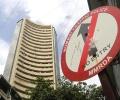
Investors became poorer by over Rs 4.47 lakh crore on Friday as markets faced severe drubbing, mirroring weak trends in global equities. The 30-share BSE benchmark dived 866.65 points or 1.56 per cent to settle at 54,835.58. During the day, it tumbled 1,115.48 points or 2 per cent to 54,586.75.

Benchmark stock indices Sensex and Nifty closed with losses in a choppy trade on Thursday as investors preferred a cautious approach ahead of inflation and industrial production data to be released later in the day. Unabated foreign fund outflows also hit the investor sentiment. The 30-share BSE Sensex declined by 147.47 points or 0.25 per cent to settle at 59,958.03.

Simply put, asset allocation entails holding a portfolio comprised of various asset classes like equity and debt, among others. Over longer time frames, asset allocation can help investors protect their portfolios on the downside and create wealth as well. Powered by investments in both equity and debt, balanced funds qualify as asset allocation tools. The debt component in balanced funds can insulate the investor's portfolio from the volatility in the equity markets.

Mutual funds, as experts and custodians of another set of retail investors' savings, play a speculative game they are neither supposed to nor equipped to do, cautions Debashis Basu.

Falling the second consecutive session, equity benchmark Sensex dropped over 140 points on Friday, tracking weakness in banking and energy stocks amid a mixed trend overseas. Investors also remained concerned over persistent foreign fund outflows, traders said. The 30-share BSE index ended 143.20 points or 0.24 per cent lower at 58,644.82. Similarly, the NSE Nifty shed 43.90 points or 0.25 per cent to close at 17,516.30.

Importantly, is there hope going forward?

Equity benchmark Sensex and Nifty ended marginally down on Tuesday tracking losses in metal, banking and financial stocks. Investors also remained concerned over persistent foreign fund outflows, traders said. Falling for the fifth consecutive session, the 30-share BSE index ended 37.70 points or 0.07 per cent lower at 57,107.52. Similarly, the NSE Nifty shed 8.90 points or 0.05 per cent to close at 17,007.40.

Among Sensex stocks, SBI, IndusInd Bank, HDFC Bank, Axis Bank, HDFC, Tech Mahindra, ICICI Bank, Ultratech Cement, L&T, Bajaj Finserv, Reliance, HCL Tech, Asian Paints, Wipro and M&M were the major losers. On the other hand, HUL advanced the most by 1.14 per cent. Maruti, Tata Steel, NTPC and Sun Pharma also posted gains.

Tech Mahindra was the top loser in the Sensex pack, shedding around 3 per cent, followed by Infosys, HCL Tech, SBI, Kotak Bank and HDFC. NSE Nifty plunged 231.10 points to 17,374.75.
Because of local and global problems, inflation pressures may continue, helping these schemes perform better.

Benchmark indices rallied on Friday with the BSE Sensex climbing over 390 points to settle above the 56,000-mark amid fresh buying by foreign funds and largely positive global market trends. Intense buying in banking and finance counters also drove the indices higher. Rising for the sixth straight session, the 30-share BSE benchmark jumped 390.28 points or 0.70 per cent to settle at 56,072.23.

Equity benchmark Sensex rallied 515 points on Thursday to reclaim the 59,000-level, propelled by heavy buying in IT, banking and financial stocks amid sustained foreign fund inflows. The 30-share BSE index ended 515.31 points or 0.88 per cent higher at 59,332.60. Similarly, the broader NSE Nifty gained 124.25 points or 124.25 per cent to close at 17,659.

Equity benchmarks nosedived on Friday, with the Sensex crashing 866.65 points to close below the 55,000-mark amid a sell-off in global markets. Unabated foreign fund outflows and firm crude oil prices also weighed on sentiment. The 30-share BSE Sensex dived 866.65 points or 1.56 per cent to finish at 54,835.58.

HDFC was the top gainer in the Sensex pack, rising around 3 per cent, followed by Bajaj Finance, HDFC Bank, IndusInd Bank, PowerGrid, UltraTech Cement, TCS, Tech Mahindra and L&T. On the other hand, ONGC, Maruti, Tata Steel, HUL, Bajaj Auto and Sun Pharma were among the laggards.

Only NIIF has stayed the course as a viable infrastructure financing institution.
IndusInd Bank was the top loser in the Sensex pack, shedding around 5 per cent, followed by Kotak Bank, HUL, Titan, Bajaj Finserv and HDFC. NSE Nifty plunged 263.20 points to 16,985.20.

The Reserve Bank of India's (RBI's) latest order on unsecured loans is set to hit the banking sector's growth in the near-term, cautioned analysts, as they see banks slowing down on aggressive retail lending. Besides, cost of funds for non-banking finance companies (NBFC) is expected to inch up as banks will pass on higher capital charge to NBFCs. "We believe the fallout of the RBI action will be mainly on growth, given the rising dependence on unsecured retail loans and lending to NBFCs for growth.

Removal of mark-ups to be paid by Maruti, other changes could raise funding need to Rs 6,000 crore.

Tech Mahindra was the top gainer in the Sensex pack, rising around 2 per cent, followed by Bharti Airtel, Maruti, ICICI Bank, SBI, HDFC Bank, Asian Paints and Reliance Industries.

Neelesh Surana, who manages Mirae Asset Tax Saver and Mirae Asset Emerging Bluechip, remains constructive on Indian equities from a three to five-year time frame.

Investors' wealth eroded by over Rs 4.90 lakh crore on Friday amid a sharp fall in equities. The 30-share BSE Sensex tanked 1,020.80 points or 1.73 per cent to settle at 58,098.92. During the day, it tumbled 1,137.77 points or 1.92 per cent to 57,981.95. The market capitalisation of the BSE-listed firms plummeted by Rs 4,90,162.55 crore to Rs 2,76,64,566.79 crore on Friday.

In one of the largest FDI deals in realty sector, global private equity Warburg Pincus will invest Rs 1,800 crore (Rs 18 billion) in Piramal Realty, which would use the funds to develop mixed-use projects in the megalopolis.

Inflation data, both at domestic and global level, interest rate scenario in the US, geopolitical situation and general elections in 2024 are some of the major factors that would influence trading in the equity market this financial year, analysts said. Besides, foreign fund trading activity and global trends will also dictate terms in the equity market going ahead. Equity markets across the globe faced major challenges in FY23 due to concerns over high inflation, which resulted in increase in interest rates around the world, lowering investor sentiment, experts added.

Bharti Airtel was the top gainer in the Sensex pack, rising around 3 per cent, followed by HUL, HDFC, ITC, IndusInd Bank, SBI, Sun Pharma, ONGC, Tech Mahindra, L&T and Asian Paints. On the other hand, Kotak Bank, Nestle India, Tata Steel, Bajaj Finance and HDFC Bank were among the laggards.

Investors' wealth tumbled over Rs 5.78 lakh crore in two days of market fall amid a weak trend in global markets after a host of central banks hiked interest rates and gave hawkish commentary. The 30-share BSE Sensex declined 461.22 points or 0.75 per cent to settle at 61,337.81 on Friday. In the previous trade, the BSE benchmark had tanked 878.88 points or 1.40 per cent to settle at 61,799.03.

IndusInd Bank, ITC, HDFC Bank, Tata Steel, HDFC, ICICI Bank and Reliance Industries are also among top gainers. SE Nifty jumped 52.35 points to finish at 11,322.50.

Restrict investment to Rs 50,000 for tax benefits, experts tell Sanjay Kumar Singh, but caution that taxation at maturity and compulsory annuities are dampers.

Swift gains on Dalal Street this year have also led to a sharp surge in shares of equity market intermediaries like depositories, exchanges, and registrar and transfer Agents (RTAs). The stock prices of BSE, CDSL, CAMS, and KFin Technologies are up 24-283 per cent so far in 2023 when compared to a 9 per cent rise in the benchmark Nifty index. With the market buoyancy expected to keep up the pace, analysts believe these stocks are a good long-term bet despite the sharp rally, which can trigger an intermittent correction.
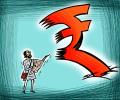
The rupee slipped by 4 paise to close at 77.59 (provisional) against the US dollar on Tuesday, weighed down by a negative trend in domestic equities and unabated foreign fund outflows. At the interbank foreign exchange market, the rupee opened lower at 77.56 against the greenback, and finally settled at 77.59, down 4 paise over its previous close. During the trading session, the rupee touched an intra-day low of 77.67 and a high of 77.51.

M&M was the top gainer in the Sensex pack, rallying around 6 per cent, followed by PowerGrid, Tata Steel, IndusInd Bank, Reliance Industries, HCL Tech, ONGC and Infosys. On the other hand, Bajaj Auto, Asian Paints, Sun Pharma, HDFC and Nestle India were among the laggards.

UltraTech Cement was the top gainer in the Sensex pack, rising over 3 per cent, followed by Kotak Bank, ICICI Bank, Asian Paints and Tata Steel.

IndusInd Bank was the top gainer in the Sensex pack, rallying over 4 per cent, followed by Bharti Airtel, Axis Bank, ICICI Bank, Bajaj Finance, Sun Pharma, HDFC and Kotak Bank. On the other hand, Titan, Maruti, ITC, Asian Paints, HCL Tech and Bajaj Auto were among the laggards.
Equity benchmarks fell sharply on Thursday in line with an extremely weak trend in the global markets, with the Sensex plunging 1,154.78 points in early trade. Persistent foreign fund outflows and a spurt in crude oil prices also dampened sentiment. The 30-share BSE benchmark was trading 1,154.78 points lower at 53,053.75. The broader NSE Nifty tumbled 335.65 points to 15,904.65.

The mutual fund (MF) industry has seen a fair number of new entrants in the last 10 years but none of them have proved to be much of a challenge for the larger players. The list of top 20 fund houses, which manage over 90 per cent of the industry's total assets, continues to be dominated by players who have been in the business for more than a decade. Bajaj Finserv MF may change that, say experts.

Aided by the $57.8-billion merger of HDFC Bank and HDFC, India Inc reported its highest ever mergers and acquisitions in calendar 2022 at $171 billion as against deals worth $145 billion announced last year. The acquisition by the Adani group across cement, media and ports dominated the headlines with the conglomerate making its foray into the cement sector by buying Swiss materials firm Holcim's stake in Ambuja Cements for $6.5 billion. The Adani family's additional $4-billion open offer for Ambuja did not get a response because shareholders preferred to stay invested with the new owner.

From the Sensex pack, State Bank of India, ICICI Bank, IndusInd Bank, Axis Bank, Kotak Mahindra Bank, HDFC Bank, Reliance Industries were among the major laggards. Bucking the trend, auto stocks Tata Motors and Mahindra & Mahindra closed with gains.

Shares of Yes Bank may face selling pressure as the Reserve Bank-mandated three-year lock-in period for individual investors and exchange-traded funds is ending on Monday, according to analysts. The analysts expect distress on the bank counter on Monday as they expect investors, primarily the nine banks led by State Bank, which picked up almost 49 per cent of its stocks in March 2020 for Rs 10 per share -- at a premium of Rs 8 on the face value as part of the RBI bailout, making an exit. Exchange-traded funds are also likely to press the exit button.

Most infra projects have hit a road block due to high cost of funds.

The derivatives expiry on Thursday is also expected to add to the volatility.

M&M was the top gainer in the Sensex pack, surging 3.37 per cent, followed by Sun Pharma 2.53 per cent, Asian Paints 1.88 per cent, ITC 1.66 per cent, HDFC Bank 1.58 per cent and Tech Mahindra 1.51 per cent.
